Capitol Corner: Federal Workforce Legislation Helps Frame Local Artificial Intelligence Discussion
August 21, 2026 — Artificial intelligence (AI) and data center development are quickly becoming vital topics for local governments across the country. As these industries expand, municipalities and counties are evaluating how emerging technologies will affect workforce dynamics, infrastructure planning, economic development, energy demand, water resources, land use, and long-term local readiness.
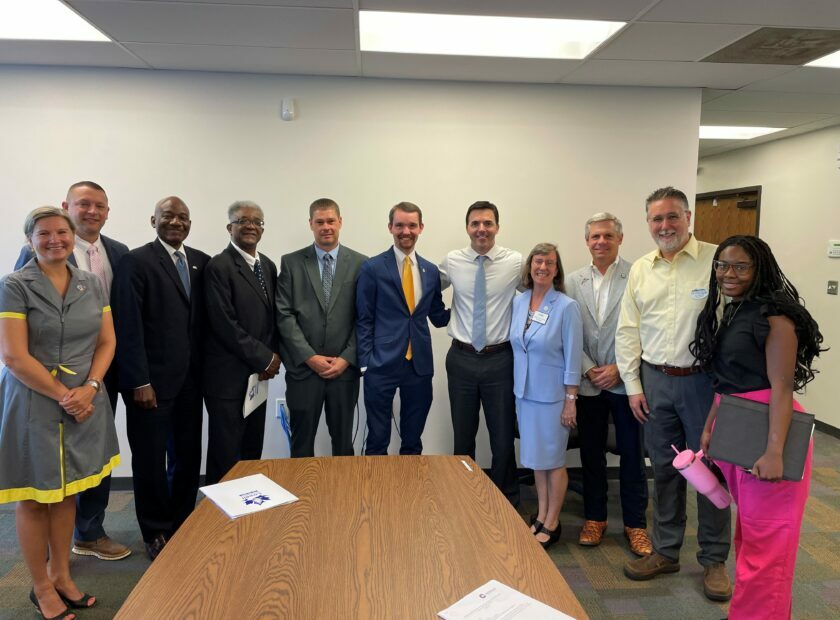
At Centralina Regional Council’s August 12 Board of Delegates meeting, local elected officials from across the region gathered to discuss the evolving AI economy along with the specific opportunities and challenges it presents for member communities. The session focused on the critical intersection between federal policy discussions and local planning, particularly surrounding regional data center growth.
Lindsay Courtney, Regional Director for U.S. Senator Ted Budd (R-NC), joined the meeting to highlight Senator Budd’s policy initiatives on artificial intelligence and workforce readiness. The bipartisan Workforce Transparency Act of 2026 (S. 4476) introduced by Senator Budd with Senator Mark Warner (D-VA), aims to help lawmakers and local leaders better evaluate how artificial intelligence is shaping the modern labor market.
The legislation would establish a clear federal framework for collecting timely data on AI adoption across both the public and private sectors. Under the bill, the U.S. Department of Labor, supported by the U.S. Bureau of Labor Statistics and the U.S. Census Bureau, would gather and publish aggregated workforce transparency metrics. Participating entities could submit data regarding task-level or activity-level AI integration, user geographic distributions, and shifting usage trends over time. To ensure robust privacy protections, all submitted data would be fully de-identified, anonymized, and aggregated.
For local governments, this data would serve as an essential tool when planning for workforce transitions, identifying economic development opportunities, and targeting future skills training. As AI tools become standard across industries, reliable data will empower federal, state, regional, and municipal leaders to make informed decisions regarding job roles, technical skills, worker productivity, and employer requirements.
With a limited number of legislative days remaining in the 119th Congress, the bill’s short-term path to passage remains tight. However, if final action is not completed before the session adjourns, lawmakers may reintroduce the measure in the 120th Congress.
Centralina extends its sincere thanks to Lindsay Courtney and Senator Budd’s office for collaborating with local leadership and sharing valuable updates on federal policy. When lawmakers are home for district work periods, Centralina encourages local officials to actively engage with our congressional delegation. Direct outreach ensures that local perspectives inform federal policy as Centralina continues tracking AI policy, workforce development, and data center planning across the region.