Capitol Corner September 2023

August Advocacy Update

In August, the House and Senate are adjourned and members of Congress traditionally spend their time in their congressional districts. Members of Congress refer to this as the “District Work Period” and use it to meet with constituents and participate in local public events. Centralina Regional Council takes advantage of the district work period to meet locally with our Congressional Delegation to discuss our regional priorities and federal action agenda.

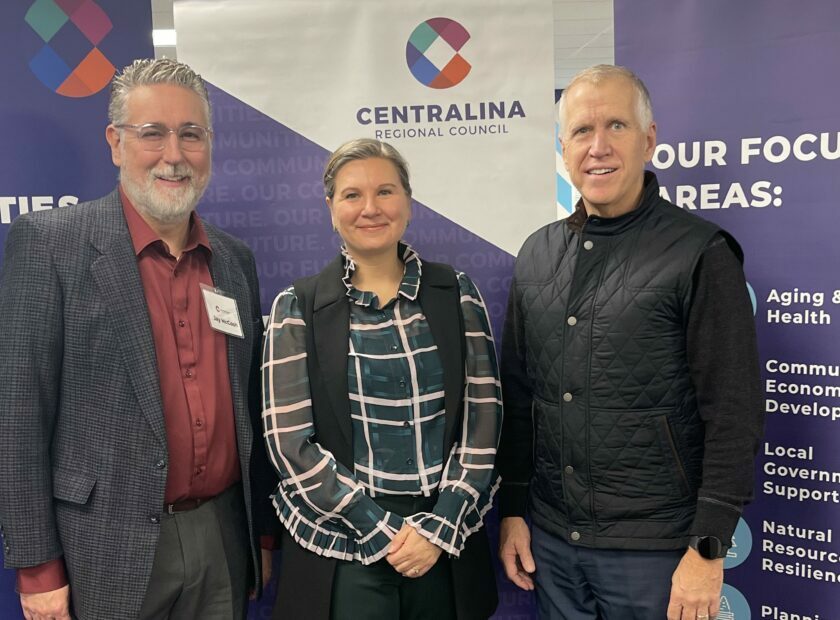
This past month, Centralina Regional Council held meetings with U.S. Representatives Alma Adams and Jeff Jackson with record attendance at both! In these sessions, we shared information on our work to increase regional mobility and advance workforce development. We also highlighted the importance of continued flexibility in the aging programs we administer.

We updated U.S. Representative Adams on the North Mecklenburg Housing Preservation Initiative and thanked her for her support of the Community Projects Fund that provided funding for the project. We also thanked U.S. Representative Jackson for his support of our Regional Infrastructure Accelerator grant, which will help further the progress of our CONNECT Beyond program.

Centralina delegates from all communities in the congressional district of each Member of Congress were invited. We demonstrated the expanse and diversity of our region with attendees from McAdenville, Cramerton, Lowell, Pineville, Ranlo, Gastonia, Kannapolis, Huntersville, Cornelius, Mint Hill, and Mecklenburg County. Those in attendance had the opportunity to share important updates and requests regarding their individuam communities. Thank you to all who contributed to the great success of these meetings by their participation. 

Centralina continues to work with the offices of our other members of Congress to schedule similar meetings for our Delegates from those congressional districts. We value these opportunities to build relationships and work together with our Congressional Delegation to ensure support for our region’s federal goals and priorities and appreciate the time our federal elected officials are taking to meet with us personally. 

Federal funds are commonly passed through state agencies in North Carolina before being awarded to local governments, which can make the original funding source less obvious. Before proceeding with a procurement, local governments should verify whether an award originates from a federal source. This determination affects compliance obligations, including procurement standards, reporting, and audit requirements.

When a construction or repair contract over $300,000 involves a building, the procurement and contract are subject to additional requirements under N.C.G.S. 143-128. Therefore, this question must be answered to determine whether the additional statutory requirements apply to this procurement scenario.

The micro-purchase threshold is a federal procurement threshold under which competitive procurement is not required. The default micro-purchase threshold is $15,000, but local governments may increase the micro-purchase threshold up to $50,000. An explanation of increasing the micro-purchase threshold and a template for the required annual self-certification is available here.