On February 28th and March 1st, the North Carolina Association of Workforce Boards and its executive directors’ council, in partnership with the NCWorks Training Center and NC Commerce Division of Workforce Solutions, hosted the very first NC Youth Forum in Greensboro, NC.
Led by nationally known trainer Mary Ann Lawrence with Power Notes, this first-of-its-kind training event allowed over 150 youth leads and youth service providers the opportunity to network and learn best practices from other workforce development professionals who serve youth through local NCWorks NextGen programs. Experts provided training on performance, data reporting, federal program eligibility, documentation and case management. Attendees also received training on Workforce Innovation and Opportunity Act topics including eligibility criteria, performance management, NCWorks Online documentation and engagement and retention strategies.
Our very own Centralina Workforce Development Board (WDB) NextGen Program Leader, Solomon McAuley, presented a workshop on youth engagement. Solomon’s presentation dove deep into what youth engagement entails, how some efforts have worked in the past and how leaders should be adapting to new forms of engagement and looking for exciting ways to keep youth empowered and encouraged.
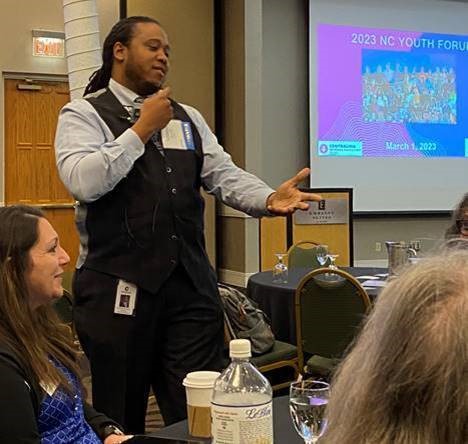
“The critical time for youth engagement falls between the time individuals are moving away from childhood and stepping into adulthood,” Solomon explained to attendees. “Youth engagement occurs when young people are involved in responsible, challenging actions that create positive social changes for themselves and others in their community. Word-of-mouth has consistently been the strongest form of marketing and recruiting for what we do, but we need to make sure we’re consistently fine tuning our processes. What worked for our generation may not work for today’s youth, so we need to stray away from the “one size fits all” mentality and cater to what young people are currently resonating with.”
Centralina WDB thoroughly enjoyed attending and participating in this inaugural event. These trainings and workshops give us the opportunity to collaborate and learn from others in the field so that we can better serve the families and young people in our region.
“It’s refreshing to see that our state has the needs of young people fresh on their minds,” Solomon commented after the event concluded. “Our team enjoyed the opportunity to learn from people across North Carolina with different backgrounds and experience. We’re leaving feeling inspired and encouraged, and I’m sure other participants are, too.”
Learn more about Centralina Workforce Development Board’s NextGen Services, along with other services we provide, by visiting our department page on the Centralina Regional Council website.

Related Posts