In December 2022, the Centralina Economic Development District (EDD) released its five-year update for the U.S. Economic Development Agency (EDA) Comprehensive Economic Development Strategy (CEDS). Centralina EDD’s CEDS strategy is broken into three goals:
- Expand Economic Opportunity (People)
- Build Community Supportive Infrastructure (Place)
- Strengthen Regional Resilience and Global Competitiveness (Economy)
Goal three of the strategy specifically defines actions related to innovation hubs. In October of 2023, UNC Charlotte was awarded a Strategy Development Grant from the EDA. The funding, provided as apart of a federal inaugural tech hubs initiative, will be put towards launching the Carolinas Innovation Center for Optics and Metrology (CICOM) Consortium. Centralina EDD was one of 25 other partners who collaborated with UNC Charlotte on the application. The CICOM consortium is being developed with three main objectives in mind;
- Increase the awareness of the importance of optics and precision metrology in advanced manufacturing
- Capitalize on the commercialization of opportunities created from research and development
- Formulate a workforce training approach that will prepare future workers for jobs in the industry
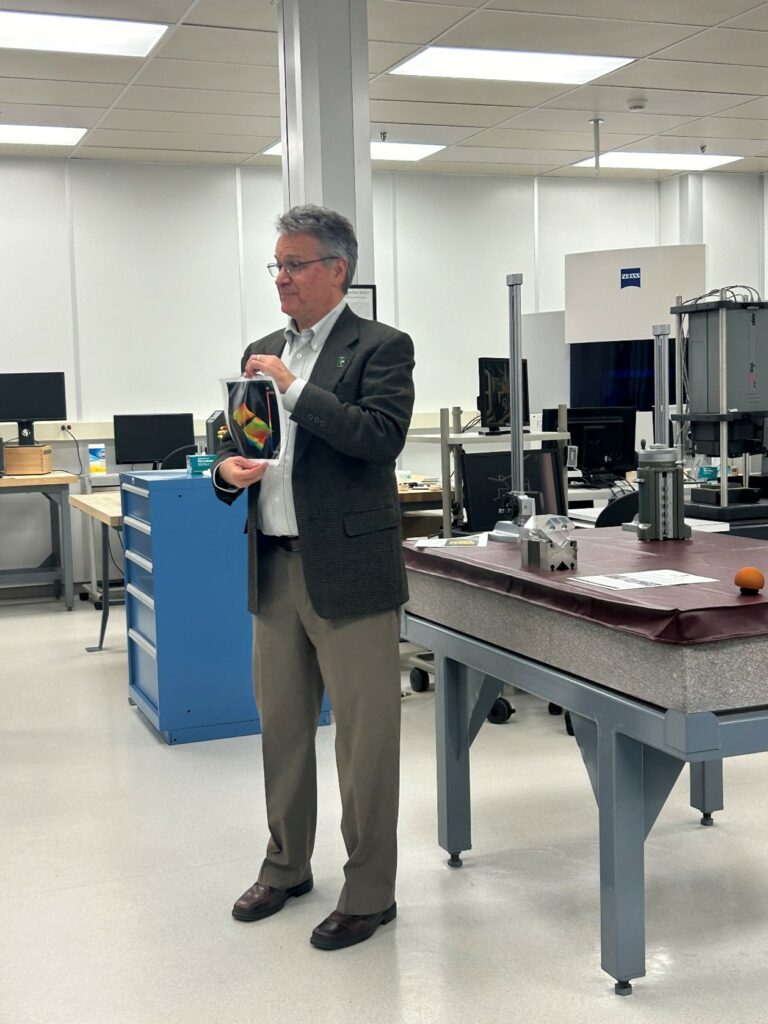
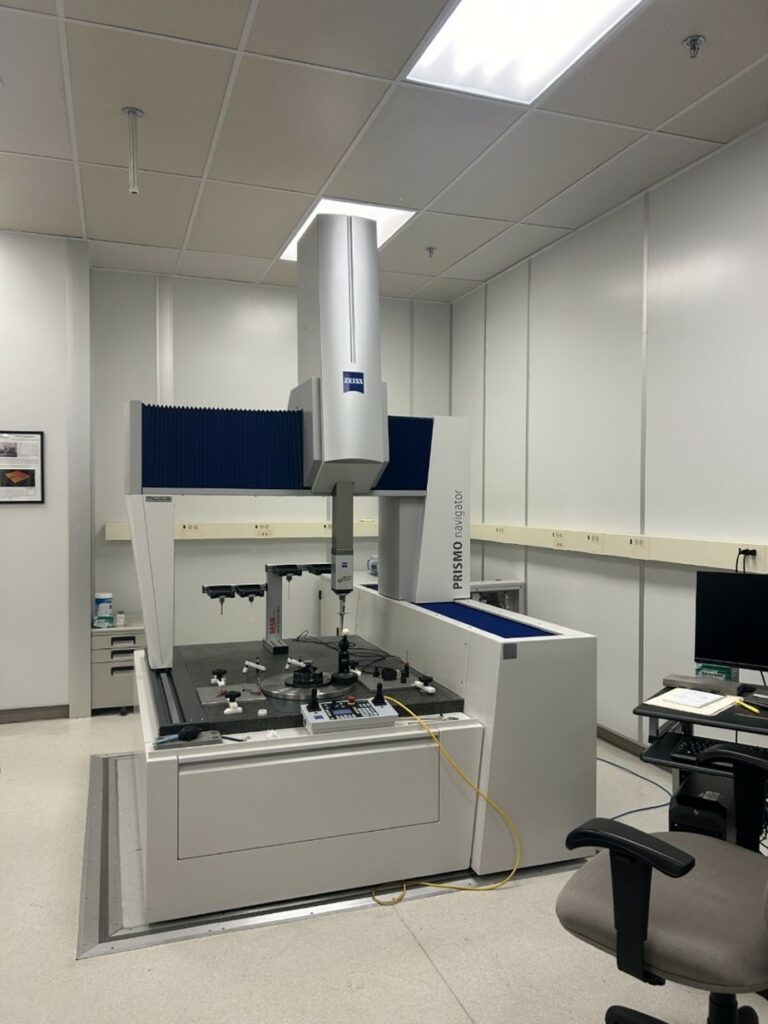
As part of the EDA Tech Hub launch, UNC Charlotte recently hosted Centralina EDD’s Board Members on campus for a discussion on the importance of optics and metrology and a tour of the metrology lab. UNC Charlotte’s Center of Precision Metrology is located in Duke Centennial Hall and occupies roughly 30,000 square feet of research space, which includes a 3,000-square-foot air-controlled environment for metrology and instrument development. The group received presentations from university representatives Greg Needham, Executive Director of the Office of Research Partnerships, Dr. Edward Morse, Director of the Center for Precision Metrology, and Dr. Glenn Boreman, Director of the Department of Physics and Optical Science.
During the tour of the metrology lab, Dr. Morse showcased the advanced technology used and how it applies to advanced manufacturing. According to UNC Charlotte, “working with state-of-the-art dimensional tolerances on the order of 10 parts per million or better, precision metrology encompasses the methods of production and inspection in manufacturing, measurement algorithms and tolerance representation and the integration of metrology into factory quality systems”. The lab technology mimics a super-powered magnifying glass that allows you to see incredibly minuscule items and then use an ultra-sophisticated ruler for measurements. Such technology ensures that designs for jet engine components produced in one country, for example, will fit in the engine located in another country when it gets assembled.
The Centralina EDD team will continue to provide updates on grant program partnership as the project progresses. If you would like to learn more about the UNC Charlotte EDA Tech Hub project, contact Anna Lu Wilson at alwilson@centralina.org.
A more detailed update on the progress of the CEDs is included in a blog post on the Centralina EDD website.


Related Posts