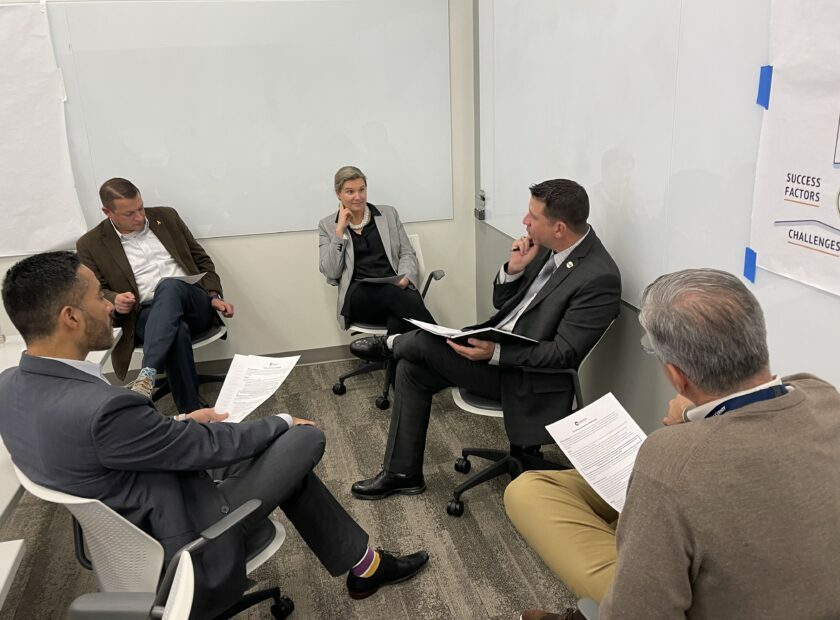
The Government Affairs & Member Engagement team at Centralina provides a range of specialized technical services to support our local member governments. Recently we have been travelling across our region, actively working with our members to facilitate board retreats. Unlike regular board meetings, retreats create time for strategic planning, guided discussions and decision-making. A successful board retreat comes with direction, agenda objectives and goals to accomplish.
How it works
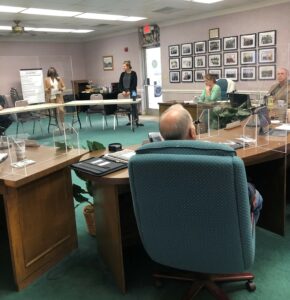 Our trained and experienced facilitators meet with board members to conduct one-on-one pre-retreat interviews. The purpose is to gain a better understanding of each board member’s vision and assess challenges and opportunities. Next, Centralina works with the community to develop a customized board agenda to meet priorities and needs. To maximize participation and ensure that the retreat is effective, we design a series of interactive exercises. We also cover budget and financial planning conversations in addition to facilitated segments that cover the prioritization of American Rescue Plan Act (ARPA) funds.
After the retreat, Centralina provides the board with a summary report that highlights key takeaways and recommendations. So far this year, we have had the opportunity to work with the City of Albemarle, City of Belmont, Town of Granite Quarry, City of Lowell, City of Statesville and Bessemer City.
City of Statesville
Centralina Regional Council worked with the City of Statesville to design a two-day city council retreat to prepare for the upcoming FY22-23 budget development and strategic planning process. This was the second time that Centralina created a customized board retreat for the city. The retreat included a variety of engaging presentations, staff briefings and a panel discussion to ensure that all perspectives and voices were represented. The first day of the retreat focused on discussing challenges and opportunities for growth. We also facilitated a conversation centered around the city’s strategic plan foundation: vision, mission and values. On the second day of the retreat, the council received financial updates, discussed capital improvement projects and participated in an interactive ARPA prioritization exercise.
City of Lowell
Centralina worked with the City of Lowell to design a two-day city council retreat, which consisted of presentations, a review of the strategic plan framework, growth projections, financial briefings and an ARPA spending plan brainstorming session. Like the City of Statesville, day one included a group discussion on the city’s progress towards its vision, mission, values and goals over the past year while also affirming its strategic foundation. As the council considered FY23 budget priorities, Centralina provided guidance on potential ARPA investments. The second day focused on the growth and development coming to the city, with Centralina facilitating discussion to gather the council’s feedback and direction on key projects. We look forward to continuing our work with member governments to provide board retreat and staff meeting facilitation services. If you’re interested in having our staff facilitate your next board retreat, please contact us at info@centralina.org or connect with your member liaison.