
November 18, 2026 — Based on current projections, North Carolina’s delegation to the 120th Congress could shift from its current makeup of four Democrats and ten Republicans to as many as eleven Democrats and three Republicans, depending on final results. In the U.S. Senate, former Governor and Senator-elect Roy Cooper (D) will replace retiring senior Senator Thom Tillis (R), who served for more than a decade, while Senator Ted Budd (R) will become the state’s senior senator. In the U.S. House, at least seven freshmen will join returning incumbents Don Davis (D-NC-1), Deborah Ross (D-NC-2), Valerie Foushee (D-NC-4), Mark Harris (R-NC-8), Pat Harrigan (R-NC-10), and Alma Adams (D-NC-12).
The races for the third and fifth congressional districts remain extremely close and face potential recounts due to narrow margins. In the fifth district, Chuck Hubbard (D) leads incumbent Representative Virginia Foxx (R), the delegation’s longest-serving Member of Congress. In the third district, Raymond Smith (D) leads incumbent Representative Greg Murphy (R). County canvasses concluded November 13, and candidates in close congressional races had until noon on November 17 to request a recount. Results remain unofficial until the State Board of Elections completes the statewide canvass on November 24.
Recounts and challenges could still alter the delegation’s final makeup. Brief biographies of likely new members are provided below.
U.S. Senate
Roy Cooper (D) – North Carolina Senate
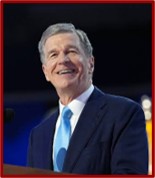 Former North Carolina Governor Roy Cooper was born and raised in Nash County, North Carolina, where he attended public schools and worked summers on the farm before earning undergraduate and law degrees from the University of North Carolina at Chapel Hill. He practiced law in Rocky Mount before serving as the longest-serving Attorney General in state history, from 2001 to 2017. As a two-term governor, Cooper helped make North Carolina one of the nation’s fastest-growing states. He and his wife, Kristin, have three daughters and live in Raleigh, North Carolina.
U.S. House of Representatives
Representative Raymond Smith (D) – Third Congressional District
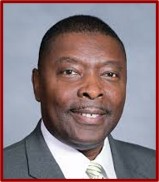 Raymond Smith succeeds Representative Greg Murphy. A Goldsboro High School graduate, he holds a bachelor’s in Supply Chain Management from North Carolina A&T University, a master’s from North Carolina Central University, and a doctorate in Education Leadership from Fayetteville State University. Before joining the General Assembly, he was an educator, football coach, and the first African American at-large member and vice chairman of the Wayne County Board of Education. Smith served in the U.S. Army and Army Reserve and is a decorated Gulf War combat veteran and former military policeman. He lives in Goldsboro with his wife, Dr. Cortrina Smith, and their five children.
Chuck Hubbard (D) – Fifth Congressional District
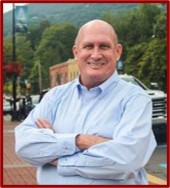 Chuck Hubbard succeeds Representative Virginia Foxx (R). He was raised in Wilkes County, where he attended local schools; he went on to earn a bachelor’s degree from Wofford College. Driven by a lifelong passion for journalism, he spent over 40 years working as a local reporter. He has served on the board of Wilkes Recovery Revolution, the Wilkes Child Abuse Prevention Team, and the Wilkes Prison Ministry. Hubbard lives in Wilkesboro with his wife, Shari. They have three daughters and two grandchildren.
Representative Cyril Jefferson (D) – Sixth Congressional District
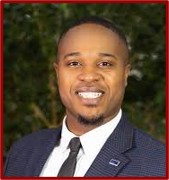 Cyril Jefferson succeeds Representative Addison McDowell (R). He grew up in North Carolina and earned his bachelor’s degree at North Carolina A&T University. Jefferson was elected to the High Point City Council in 2019 and elected mayor of High Point in 2023. Cyril helped launch Thrive High Point, a business initiative that raised more than $3 million to support local entrepreneurs. He also played a lead role in bringing the Carolina Core Football Club, a professional soccer team, to the area. That project helped spark new investment and economic activity across the community. Jefferson currently lives in High Point, NC, with his wife and two children.
Richard N. Ojeda II (D) – Ninth Congressional District
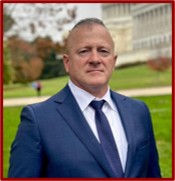 Richard Ojeda succeeds Representative Richard Hudson (R). Raised in Logan County, West Virginia, he earned his degree from West Virginia State University before being selected for officer training, launching a 25-year Army career. Serving as an Airborne Sapper, he spent 15 years stationed at Fort Bragg and completed three combat tours overseas. After moving back to West Virginia to care for his aging parents, Ojeda was elected to the State Senate in 2016 and served until January 2019. He relocated back to North Carolina with his family in 2020. Ojeda lives in Aberdeen with his wife, Kelly Ann, and has three children.
Jamie Ager (D) – Eleventh Congressional District
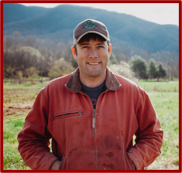 Jamie Ager succeeds Representative Chuck Edwards (R). He was born and raised in Fairview, North Carolina. Five generations of his family have farmed land in Fairview, and he has spent his life growing food, building community, and working with people. Ager graduated from Warren Wilson College, where he earned degrees in Environmental Studies and History. He and his wife, Amy, run a sustainable meat company that employs 25 people and works with farmers across the region. They live in Fairview and have three boys.
Paul Barringer (D) – Thirteenth Congressional District
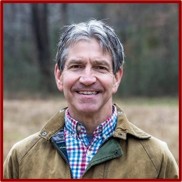 Paul Barringer succeeds Representative Brad Knott (R). He grew up in Lee County, North Carolina, and earned a bachelor’s from Davidson College, a law degree from the University of North Carolina at Chapel Hill, and a master’s from Princeton University. He currently works as a healthcare consultant and provides pro bono legal representation to individuals with disabilities seeking Social Security benefits. He taught Sunday school for 20 years, was a Boy Scout leader for 10 years, and enjoys endurance sports. Barringer lives on his family’s farm in Lee County with his wife and two children.
LaKesha Womack (D) – Fourteenth Congressional District
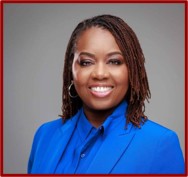 LaKesha Womack succeeds Representative Tim Moore (R). Raised in Evergreen, Alabama, Womack is an ordained minister in the African Methodist Episcopal Zion Church. She holds a degree from Vanderbilt University and is currently pursuing a Master of Legal Studies. As the founder of Womack Consulting Group, she has spent over two decades helping businesses, nonprofits, and faith-based groups build long-term sustainability. She has a 20-year-old son and lives in Mecklenburg County, North Carolina.
About the author: Strategics Consulting is Centralina’s federal government relations consulting firm. To learn more, visit www.strategics.consulting.
Related Posts


