This article is part of our series celebrating Women’s History Month
The aging network in the greater Charlotte area is a close-knit group of professionals, many of whom can draw the beginning of their education of gerontology to the University of North Carolina at Charlotte’s gerontology program. The program has been a staple in the aging network for decades and there is one woman who has been both director of the program and mentor to many students, Dr. Dena Shenk.
 Dr. Shenk is passionate about quality of life for older adults and has committed many years to research, as well as educating masses of students about older adult issues, current events and ways to move the world of gerontology forward. Having retired in 2015, she gained the prestigious title of Professor Emeritus from UNC Charlotte. She has continued to be a mentor to her previous students and conduct research into retirement. Her latest work will be published regarding a study on the effects of the COVID-19 pandemic on long-term services and supports, especially nursing home care in the Charlotte area.
Dr. Shenk has been a leader in our region since the 1980s and we are grateful for her leadership and the time she has spent mentoring emerging leaders in the aging field. She is the recipient of the 2011 Hiram J. Friedsam Mentorship Award from the Association for Gerontology in Higher Education, the 2014 Evelyn Berger Educator and Advocate Award by Charlotte Mecklenburg Aging Coalition and the recipient of the 2015 Harshini V. de Silva Award at UNC Charlotte. Truly, she has influenced the UNC Charlotte gerontology program and the community invaluably.
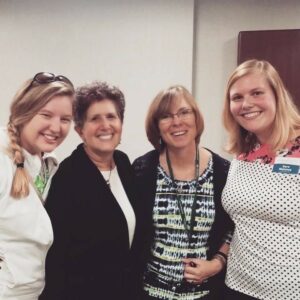
Pictured: Julia Burrowes, Dr. Dena Shenk, Dr. Cynthia Hancock, Sara Maloney

Related Posts